
We recently completed a commercial access control installation at an office building in Dallas. The project involved securing multiple restroom doors with centralized door access — magnetic locks, card readers, and ADA-compliant push-to-exit buttons.
Before: Standard Doors With No Access Control
Before our installation, the restroom doors were standard commercial doors with basic push plates and pull handles — no card readers, no mag locks, no ADA push buttons. Anyone could walk in from the hallway without restriction. The doors had hydraulic door closers already installed, but no electronic access hardware of any kind.
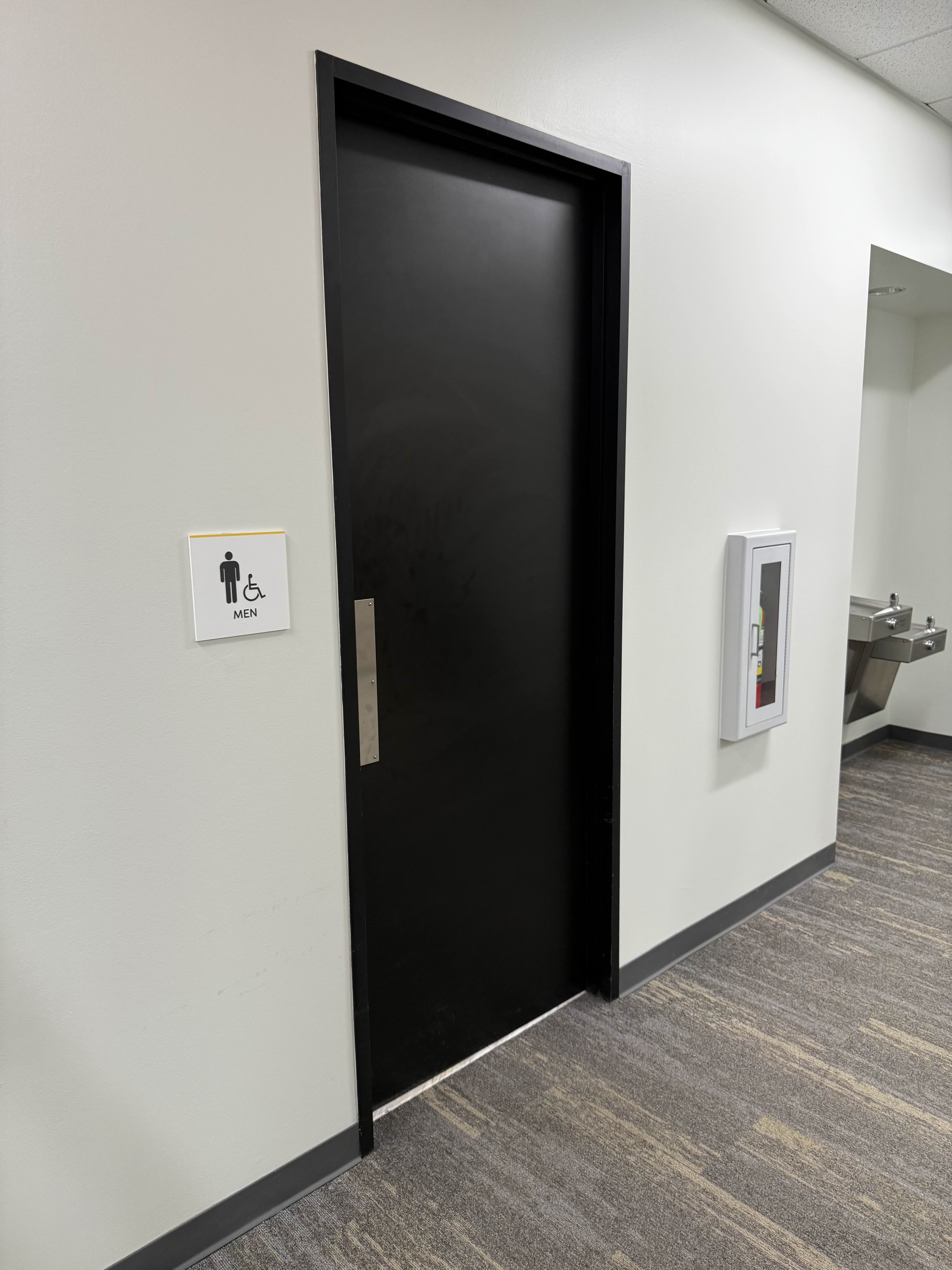
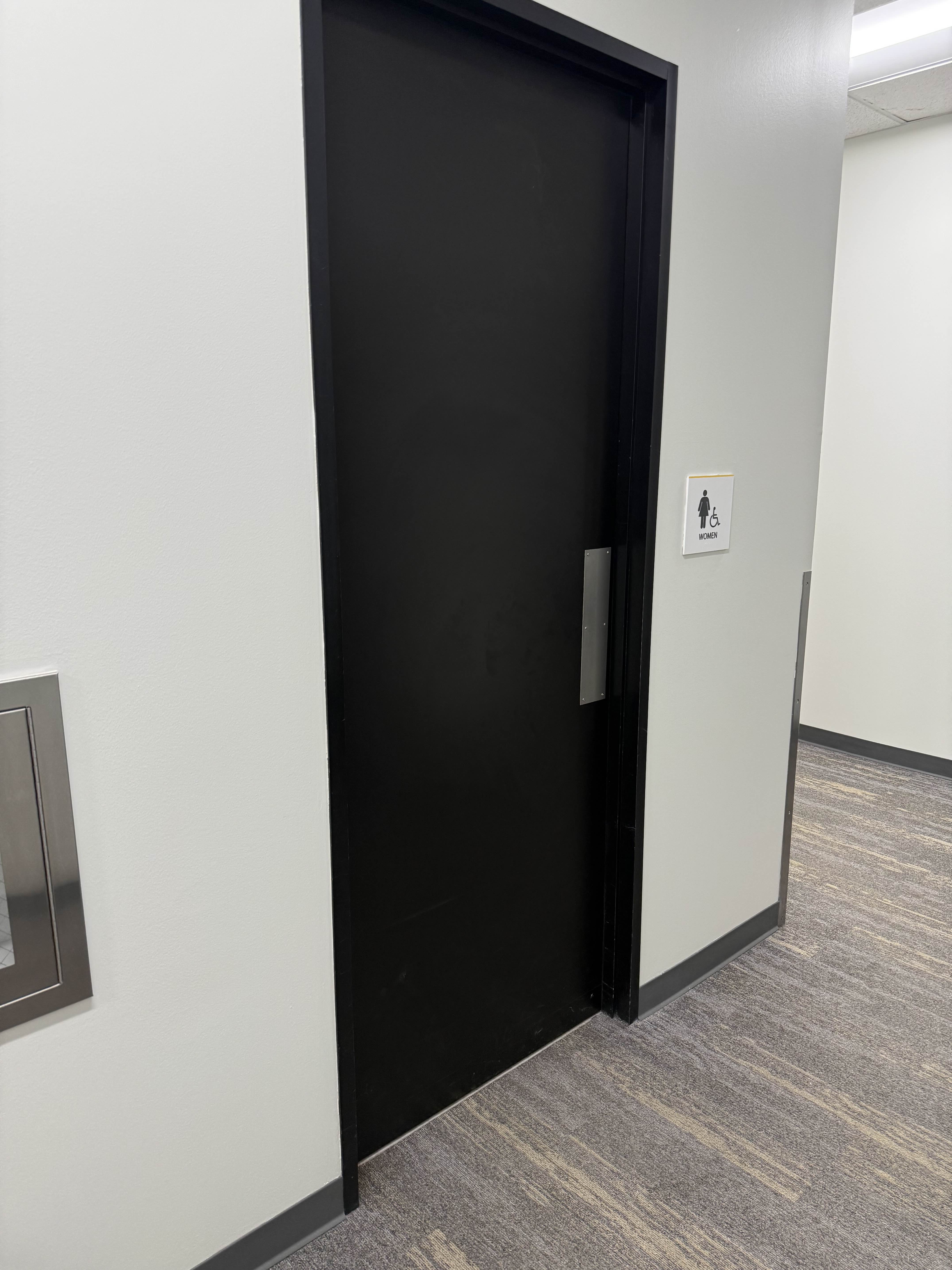
The Job: Centralized Door Access for Commercial Restrooms
The building needed controlled access on their men’s and women’s restroom doors. This is common in commercial office buildings, coworking spaces, and multi-tenant properties where restrooms are shared between tenants but need to be restricted from public walk-in access.
What We Installed
Magnetic door locks (mag locks) — Mounted above each door with a door closer to ensure the door returns to the locked position after every use. Mag locks provide strong holding force and are reliable for high-traffic commercial doors.
Card readers — Small black card/fob readers installed next to each door on the wall. Authorized tenants and employees tap their credential to unlock the door. Lost or stolen cards can be deactivated instantly from the management platform.
ADA push-to-exit buttons — Mounted at wheelchair-accessible height inside each restroom. These serve two purposes: ADA accessibility compliance for individuals with mobility needs, and a code-required egress method so anyone inside can exit freely without needing a credential.
Door closers — Hydraulic door closers mounted at the top of each door ensure it closes and locks automatically after every entry or exit. Without a proper door closer, a mag lock system won’t function correctly because the door needs to return to the frame for the magnet to engage.
Why Businesses Need Access Control on Restrooms
It might seem unusual to put access control on restroom doors, but it’s actually one of the most common requests we get from commercial property managers in Dallas:
- Multi-tenant buildings — Restricts restroom access to paying tenants and their employees
- Security — Prevents unauthorized individuals from accessing the building interior through restroom entries
- Liability — Creates audit trails showing who accessed which areas and when
- ADA compliance — Push buttons ensure the doors meet accessibility requirements
Our Access Control Installation Process
Every access control job follows the same basic process:
- Site survey — We walk the facility and assess each door, frame, and surrounding wall space for hardware placement
- Hardware selection — Match the right lock type (mag lock vs electric strike), reader type, and push button placement to each opening
- Installation — Mount all hardware, run low voltage wiring, and connect controllers
- Programming — Configure credentials, set access schedules, and test every door
This particular job was straightforward — the building had solid commercial door frames that accepted the mag lock hardware without modification, and adequate wall space next to each door for the readers and push buttons.
Need Access Control for Your Dallas Business?
Whether you need a single door secured or a complete multi-door access control system across your building, we handle the full installation — hardware, wiring, and programming. We work with offices, medical facilities, warehouses, and multi-tenant properties throughout the Dallas-Fort Worth area.
Contact us to schedule a security assessment or call us directly to discuss your project.
Tried the steps and still stuck?
Tell us what's happening and a DFW technician will get back to you within 30 minutes during business hours. We come to your home or office, same day.